Mall Rivals loans, ATMs, and borrowed cash
A second store often costs more than starting cash. Lenders exist. So does a day you cannot repay.
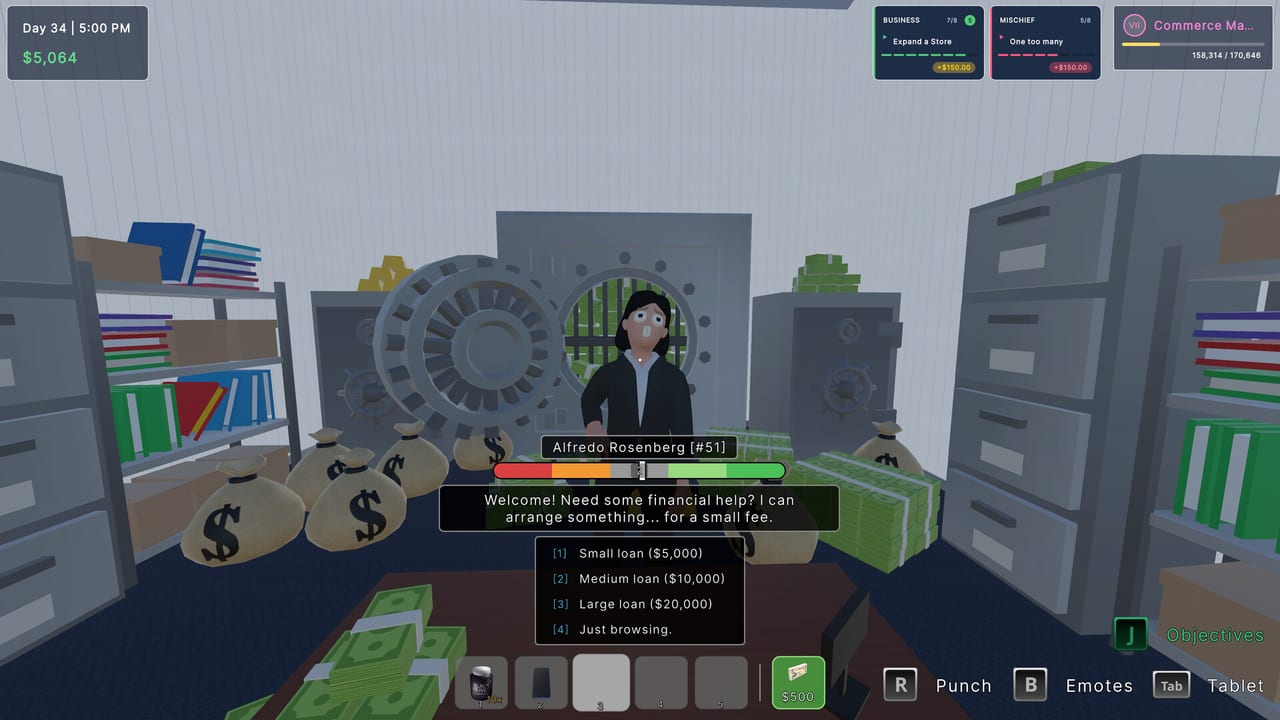
Starting cash in Mall Rivals is lobby-dependent — older beginner saves sit near $15,000, later setups $30,000 or more — and a vacant unit plus opening stock can eat most of it. Players then walk the mall looking for an ATM and a person who will lend. Ike’s first-store run points them out next to the jail and the boardroom: two lenders, two ATMs, not a spreadsheet in the tablet. Zerkaa’s group found a shady guy down an alley offering bags of cash. This page is how that money actually works in 1.0, not a bank sim from a different mall game.
If you have not leased a unit yet, read getting started first. A loan does not teach grab.
Where the money lives
The HUD cash number is what you spend on leases, hiring fees, and wholesale. It is not “mall value.” Furniture, unsold stock, and a second key still count when you sell a store at about 50%, but a lender wants the liquid number. Comeback refreshed the bank’s look; 1.0 did not turn it into an idle interest account. You walk to a person or a machine. You take the deal or you do not.
Tablet Market still orders boxes. The lender is a corridor NPC. Do not stand at the register waiting for a “loan” button that is not there.
Why people borrow
Typical honest uses:
- Opening stock after a tight lease. Electronics and Pharmacy eat restock cash faster than Fashion.
- A second license the tier panel is nagging you about, when shop one already has a cashier.
- A music or specialty unit in the $16k–$20k range when you are sitting on $4k after a bad day. Bladii’s $20,000 credit into a music store is the cautionary tape in the middle of this page.
Typical dishonest uses: fencing cash is slow; a loan is fast. Crime plus a loan is how you buy a lockpick evening and then cannot pay the fine. Combat and Crime perks do not repay principal.
How to take a loan without wiping
- Know the game mode. A short cash-target lobby does not have time to service debt. A Mall Buyout can, if the extra license actually prints.
- Keep shop one staffed. A loan that buys a second till you cannot stand is a wage bill plus interest. Employees.
- Price the new SKUs at market the same hour. Pricing and the price helper.
- Order inside the store, not into the corridor. The August 2026 release-candidate hotfix made wholesale piles stack on the floor instead of inside walls — still a fine if you dump them in the hall.
- Plan repayment from daily profit, not from hope. If wages already eat a third of shop one’s day, do not add a note.
Zerkaa’s table argued “one loan per person.” That is a house rule, not a game cap, but it is a good house rule in co-op. In FFA, your rival’s loan is their problem until they undercut you with the extra stock.
ATM versus alley
The visible ATM is the clean path: stand, take the offer, live with the number. The alley lender is flavour from Early Access clips — same cash, worse optics if ShameTV is hunting you for something else. 1.0 police care about theft and corridor boxes more than about your credit score. They will still freeze you if you take a loan and then drop the crates in the hall.
Comeback’s bank visual refresh made the counter easier to find. If you cannot see a lender, you are on the wrong floor or the procedural mall hid them behind a planter. Walk the entrance loop once before you assume the feature is gone.
Loans and the Mall Buyout
Borrowed cash spends. It also sits as a liability in your head even if the HUD only shows the positive number. A buyout race is “name on the mall,” not “highest gross including unpaid notes.” If the lobby is counting cash on hand, a loan you have not repaid is a fake lead. Read Mall Buyout before you leverage a third key.
Selling a failing unit returns about 50% of total value. That can close a note. It can also lock in a loss. The store planner is the cheaper tool: do not sign the second lease if the only way to afford it is a lender plus an empty cashier slot.
Common loan deaths
- Borrowing to decorate. Workshop textures do not ring the till. See Workshop.
- Borrowing to sit the casino. House edge is documented. A slot cabinet is not a restock.
- Borrowing because Sports felt small. Adjacent floor expansion can be cheaper than a second license plus interest.
- Skipping wholesale and spending the loan on one expensive SKU you cannot move.
Watch the music-store loan video through the first repayment day, then open the tablet and add wages plus the note before you walk back to the alley.
Frequently Asked Questions
Quick answers players actually search for in Mall Rivals.
Where do I take a loan in Mall Rivals?
Walk the entrance loop for ATMs and lender NPCs near jail and the boardroom. The tablet Market is for boxes, not credit.
Should I take a loan to open a second store?
Only if shop one runs without you and the new license covers a hole. See store expansion and opening picks.
Do loans count toward a Mall Buyout?
Spent cash can buy licenses. Unpaid notes are not a lead. Confirm how your lobby counts money on game modes.
Is the alley lender different from the ATM?
Same job, different flavour. 1.0 cops still care more about corridor boxes than about which NPC handed you the bills.