Mall Rivals perk tree and builds
Six branches, permanent perks, and the money you earn decides whether you are a merchant or a problem.
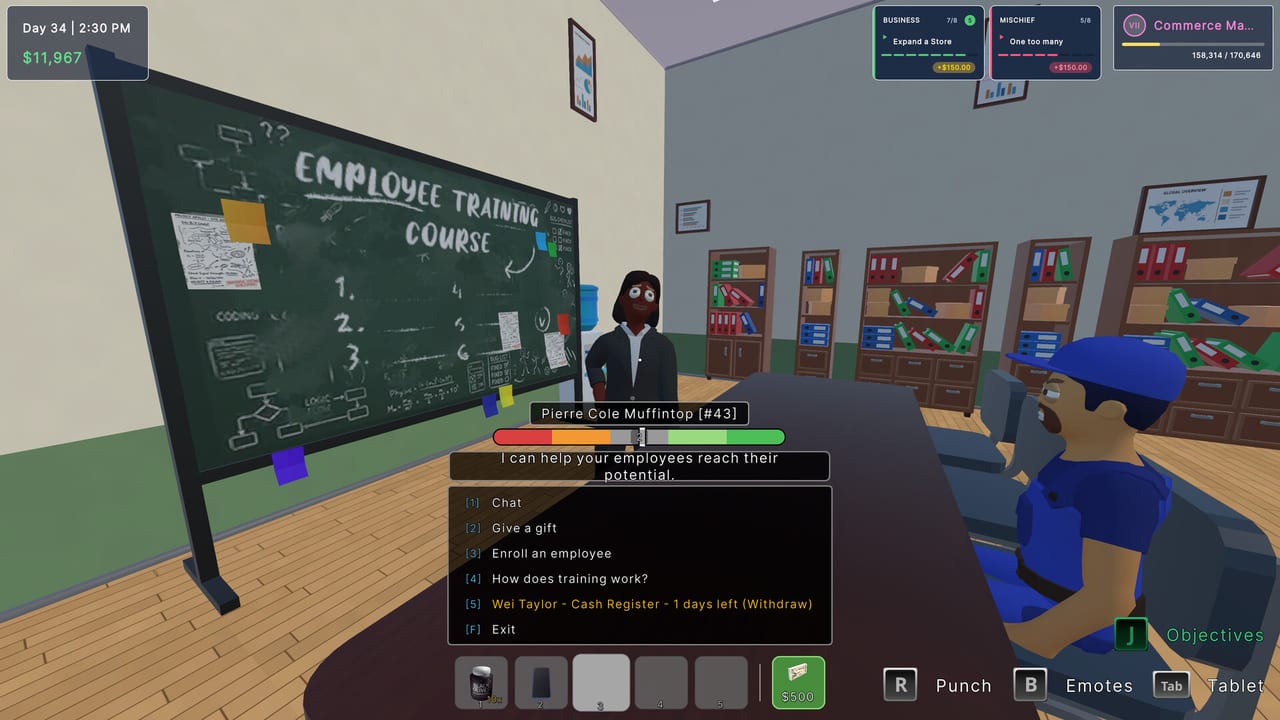
Version 1.0 did not just add stores. It added a character. The perk tree is permanent for the run: dozens of upgrades across six named branches — Commerce, Crime, Combat, Mobility, Social, and Labor. Creedon’s pitch is blunt. Will you drive harder bargains, pick pockets with faster hands, or know how to swing? Spend with a plan or you will own a little of everything and win nothing before the Mall Buyout clock matters.
This is not a numbered node list leaked from a datamine. Official notes describe the six branches and the fantasy of each. We map them to real mall jobs so you stop dumping points because a node glowed.
Pick the branch that matches the lobby
Read game modes first. A 20-minute undercut war wants Commerce and Mobility. A long co-op mall-king run wants Labor and Social. A free-for-all grief lobby wants Crime and Combat whether you like that or not, because someone else will.
Commerce — merchant main
If your highlight is a clean till and a rival staring at your tag, this is the line. It supports pricing, harder bargains, and the kind of store stats 1.0 actually shows you. Pair it with the store planner so the shops you license can feed the same customer. Commerce without a cashier is a theorycraft spreadsheet. Hire from the employee guide before you buy another yellow node.
Crime — the shady checkout
Pickpockets, lockpicks, black market. 1.0 made this a police problem, not a cartoon. Crime perks only pay if you can fence and leave. Read crime and police for fines, bribes, ShameTV, and the cell. Putting one point in Crime “just in case” is how honest runs grow a record. Commit or stay clean.
Combat — HP, stamina, swinging
The full release rebuilt health, stamina, and combat. Bodyguards punch. Bats exist for thieves. Combat is the line for people who are tired of being a loot pinata in the corridor. It is not a substitute for stocking. A knockout does not restock tennis balls.
Mobility — the mall is large
Two floors, exterior, casino, barber, wholesale, a second shop across the atrium. Mobility is the unglamorous win. Faster pathing between expansion sites is more income than a cute Social node you never proc. If you keep dying to time, not to cops, this is your tree.
Social — votes and faces
Board meetings, informants who want gifts, NPCs who remember you. Social is how you swing policy without owning the most shops. If your lobby actually uses the board, this branch is a weapon. If your lobby ignores votes, it is flavor. The board meetings page tells you whether your group is worth the spend.
Labor — the store runs without you
Training, managers, the dream of 1.0 automation. Labor is the expansion tree. It makes a second unit possible because you are not the only pair of hands. Take it when wages already make sense and you need quality, not another body on a bench.
Build sketches (not gospel)
Clean empire: Commerce into Labor, splash Mobility. Ignore Crime. Win on tags, variety, and managers. Best for co-op and buyout races where a record is a liability.
Corridor gremlin: Crime into Mobility, splash Combat. You are never in the shop. Your employees had better be real, because you will be in a cell otherwise.
Floor general: Combat into Social. You protect the unit, swing votes, and let a Commerce teammate do math. Makes sense in team versus team, not in solo FFA.
Courier king: Mobility into Labor. You are wholesale and restock. Prices stay on the helper. Boring. Profitable.
Respec rules were not published as a cheap refund. Treat points as permanent for the mall you are in. That is why this page keeps saying “pick a job.”
How money feeds the tree
Official copy: the money you earn shapes your character. That means the tree is not a side XP bar you fill by existing. Sales, fences, and maybe event payouts are the fuel. A dead shop cannot spec Combat enough to matter. Fix the till with getting started habits, then spend.
Dynamic events from Comeback — trending products, shortages, security incidents — change which branch spikes in value for a day. A security incident is a Combat/Crime weather report. A wholesale event is Mobility weather. Do not respec your identity for a banner; take the event with the build you already have.
Common perk mistakes
- Splitting 1-1-1-1-1-1 because every icon looks nice.
- Crime nodes on a family co-op where your friends are the police.
- Combat before you own a bat and a reason.
- Labor before you understand roles, so you train people who still have no job assigned.
- Ignoring the 1.0 patch and following a demo guide that has no tree at all.
Put the first chunk of income into the branch that matches how you already died last run. The tree is a multiplier, not a personality quiz.
Frequently Asked Questions
Quick answers players actually search for in Mall Rivals.
How many perk branches does Mall Rivals have?
Six in 1.0: Commerce, Crime, Combat, Mobility, Social, and Labor.
Can I max every perk tree?
Treat perks as a commit. Official notes frame them as a playstyle choice funded by the money you earn, not as a completion checklist.
What perks should beginners take?
Commerce and Labor if you are learning shops. Mobility if the mall already feels too big. Avoid Crime until you can restock without corridor fines.
Do perks replace employees?
No. Managers and training live alongside the tree. You still hire and assign roles on the employees page.