How to navigate the Mall Rivals map
Escalators, entrances, upper floors, and why a corner unit is not always a death sentence.
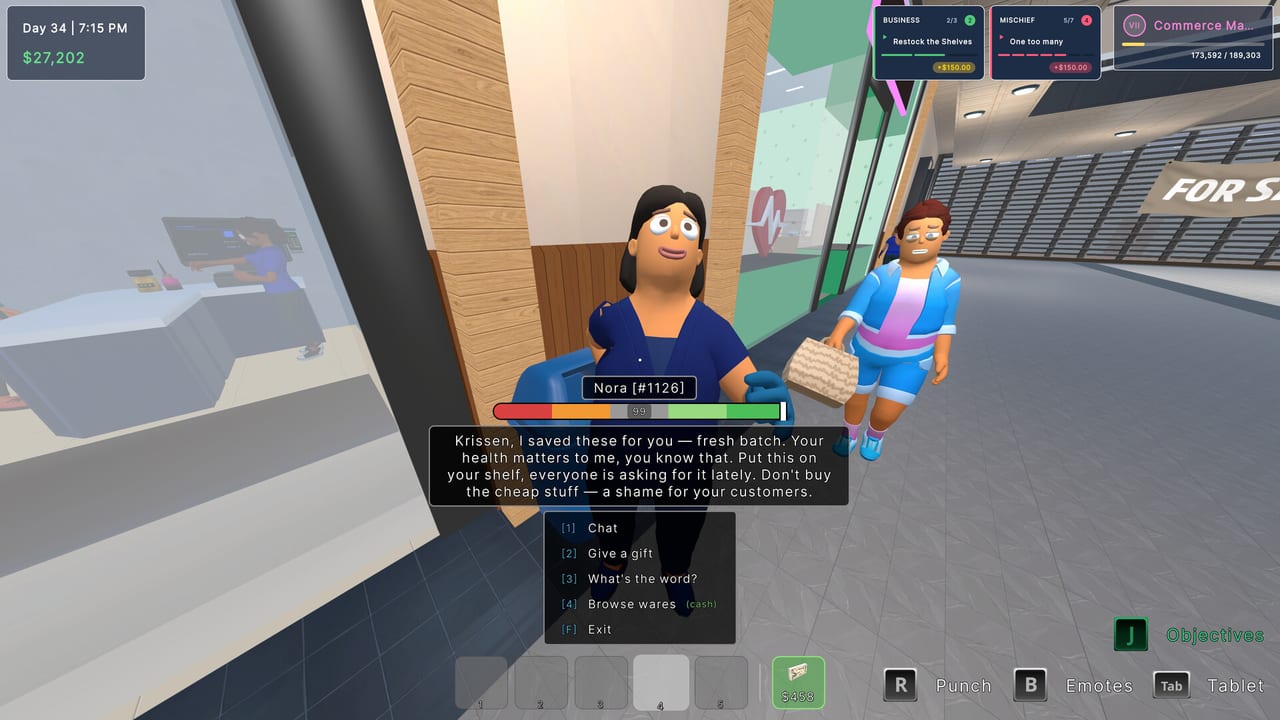
Every Mall Rivals match rebuilds the mall. Walls move, corridors shift, and the unit you leased last Tuesday in a different lobby is not there today. This page is the orientation guide for a building that changes shape every run — and the practical tactics for picking and surviving a location once you are inside.
If you still need to buy a unit, pair this with getting started and the store tier list. This page assumes you can walk and grab; it is about where to walk.
Procedural generation — what changes, what does not
The mall is seeded fresh every lobby. What changes:
- Corridor layouts and dead ends
- Store unit positions and sizes
- Entrance and escalator locations
- Upper floor connectivity
- Decoration placement and lighting zones
What does not change across runs:
- The fundamental grammar: stores cluster by type, entrances funnel customers, escalators connect floors
- Core systems: wholesale spawn points, recruitment benches, lender NPCs, board room, jail, casino
- The fact that the mall has a beginning, a middle, and functional shortcuts
Do not memorize a path from a streamer VOD. Scout every lobby on day zero.
Entrances and how customers find you
Every mall has defined entrance points. Customers spawn at entrances and navigate toward stores they want. This has direct consequences:
- A store near a busy entrance gets casual foot traffic whether your prices are right or not
- A store at the end of a dead-end corridor requires customers to actively choose to visit
- Upper-floor stores near escalators can pull significant traffic if customers know the escalator exists
Comeback added upper-floor entrances so a second-story shop is not automatically exiled. That change matters: do not assume a floor-two unit is a trap without checking where the stairs land.
Escalators, stairs, and floor connectivity
Mall Rivals uses escalators and straight stairs to connect floors. The pattern matters for three reasons:
-
Wholesale routes. A second-floor unit with a nearby escalator to the wholesale area is a manageable restock walk. A unit that requires circling the entire floor adds real time to every haul.
-
Customer pathing. If customers spawn on floor two near your unit, you get free foot traffic. If the only escalator deposits them on the opposite side of the building, you are fighting for attention.
-
Police pathing. Cops patrol escalators and stairs. A getaway route through the escalators works until it does not.
Scout the stairs before you commit to a lease. The Select Store Type panel shows unit location; it does not show escalator position relative to that spot.
The food court and anchor points
Most malls have a food court — a natural congregation zone that players learn to use as a meeting point and a restock shortcut. Food court proximity matters:
- Stores near food courts get casual visits from players and NPCs who are taking a break
- A store between the food court and a busy entrance is premium real estate
- In co-op, teammates often agree on shared shortcut routes through or past food court areas
Anchor points are the other navigation landmark: bank, jail, board room, and recruitment benches cluster in predictable zones. Learn where these are relative to your unit so you are not sprinting the full length of the building when you need a lender or a worker.
Upper floors — not the exile they used to be
Pre-Comeback clips show upper floors as dead zones. Comeback changed this in two ways:
-
Upper-floor entrances. Customers can now enter the mall on upper levels, not just ground floor.
-
Interior rebuild. New layouts, lighting, and wayfinding made upper floors feel like part of the mall rather than an afterthought.
A second-floor unit near a well-lit escalator can pull reasonable traffic in a lobby where nobody is watching floor two. That said, upper floors still require more wayfinding work: signs, clear sightlines from the escalator, and perhaps a store monitor broadcasting your presence.
Reading a new map in 60 seconds
When you load into a fresh lobby:
- Walk the main entrance corridor once without stopping. Note where the busy corridor ends and where the quiet corners are.
- Find the escalators and stairs. Confirm they connect to your likely unit area.
- Locate recruitment benches, wholesale spawn, and the board room.
- Note where rival units are clustering. A cluster means shared foot traffic; an isolated unit means you own that corridor.
- Walk your potential lease options before you commit.
Do not rush the scout. A wrong unit costs more than five minutes of walking.
Location versus license — which matters more
A good location with a mediocre license beats a premium license in a dead corridor. The practical hierarchy:
- Escalator adjacency. Near stairs means easy restock and natural customer flow.
- Entrance proximity. The closer to where customers spawn, the better.
- Corridor position. Corner units are not always dead — sometimes the corner faces the main walkway.
- Floor level. Ground floor is safest. Second floor requires confirming entrance access.
A Sports unit in a high-traffic corridor will outperform a Pharmacy in a corner. Read store types for license specifics; this page is about surviving the geography.
Navigation in multiplayer — call your route
In co-op and team versus team:
- Call your wholesale route before you sprint it. Teammates will not block you.
- Designate one person as the shortcut keeper — they remember where the fast escalator is.
- If you are defending a rival’s corridor approach, know the two fastest routes to that zone.
Navigation becomes a team resource. A squad that knows the mall saves real time on every restock and every emergency response to a rival’s shelf raid.
Common navigation mistakes
- Memorizing a corridor from a previous lobby.
- Leasing a second-floor unit without checking upper-floor entrance positions.
- Ignoring the escalator-to-wholesale distance when signing a floor-two lease.
- Assuming the food court shortcut exists in every procedural seed.
- Relying on a streamer path that worked in a different mall generation.
The mall changes. Your scouting habit should not.
Frequently Asked Questions
Quick answers players actually search for in Mall Rivals.
Does the mall layout change every match in Mall Rivals?
Yes. Procedural generation rebuilds corridors, store positions, and escalators every lobby. Scout every run.
Are upper-floor stores always bad?
No. Comeback added upper-floor entrances and rebuilt layouts. Second-floor units near escalators can pull real traffic.
What is the most important location factor?
Escalator adjacency and entrance proximity. Easy restock routes and natural customer flow beat premium licenses in dead corners.
How do I scout a new mall fast?
Walk the main entrance corridor once, find the stairs, locate key NPCs, note rival clusters, then walk your lease options before committing.
Does food court proximity matter?
Yes. Stores near food courts get casual visits. A unit between food court and entrance is premium real estate.